Tuesday, February 5, 2013

Problem-Creating Card Text

Can I see your graveyard? Was that properly summoned?Most of you know what this is about.

  • For any card that targets, if the effect text (after the semicolon) still refers to a ‘target’, you have to double-check that any targeting requirements are still met.
  • Otherwise, if the card refers to the target using any other word (like ‘it’) in the effect text, the targeting requirements only had to be met when the target was originally targeted.

Monster Reborn [Spell Card]
Target 1 monster in either player's Graveyard; Special Summon it.

Special Summon it

There is no implication here. Everything is explicit, in words straight from Kevin Tewart himself. "It" means that Monster Reborn's target does not need to remain a valid target when Monster Reborn resolves. Monster Reborn's new text says that Monster Reborn's target no longer needs to stay a monster in the Graveyard to be Special Summoned when Monster Reborn resolves. As illogical as it sounds improving one of the most powerful cards in Yugioh, other cards have seen significant change before this.

here comes Hyunlei
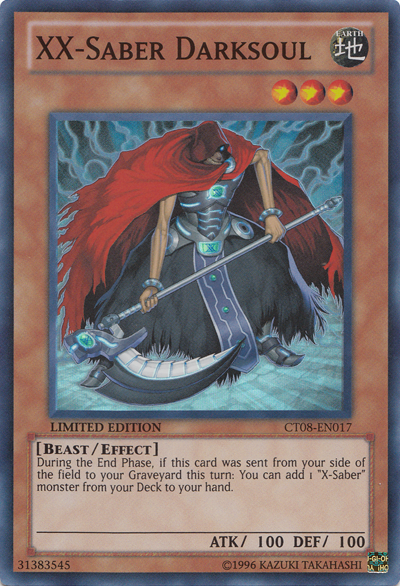
There is no "but that's how it always was" in Yugioh. Cards can have ruling changes. This is most noticeable when TCG cards land in the OCG; XX-Saber Darksoul and Inzektor Hopper being examples which were prominent enough to affect the meta. This doesn't just happen when the OCG gets a card and decides how it actually should work, though; for about a week, TCG Leviathan Dragon didn't lose its ATK gain if its effect was negated after the original activation. Beyond that, cards can have very large mechanics changed. Necrovalley has had three or four such changes, and Armory Arm is another very good example.

Necrovalley is a mess of a card that I won't go into too much detail over but, based on old card text, at different points in time TCG Necrovalley negated Treeborn Frog's Special Summon and Tragoedia's level-changing effect. Obviously, the current card text does none of that. Necrovalley's previous card texts can be found here on Wikia:


Armory Arm actually has at least two OTKs
Armory Arm
4/LIGHT/Machine/Synchro/Effect/1800/1200
1 Tuner + 1 or more non-Tuner monsters
Once per turn, you can either: Target 1 monster on the field; equip this card to that target, OR: Unequip this card and Special Summon it in face-up Attack Position. While equipped by this effect, that target gains 1000 ATK. When that target destroys a monster by battle and sends it to the Graveyard: Inflict damage to your opponent equal to the ATK of the destroyed monster in the Graveyard.

Aside from being changed from old text to PSCT, Armory Arm had a very important change in this line: "Inflict damage to your opponent equal to the ATK of the destroyed monster in the Graveyard." Previously, Armory Arm said this: "inflict damage to your opponent equal to the destroyed monster's ATK."

In case the difference and what it means aren't so obvious, the old Armory Arm did not need the destroyed monster to stay in the graveyard while the new Armory Arm does. The ruling was official in the OCG and the TCG, and then it changed to what it is now. Look up the Armory Arm OTK if you're interested.

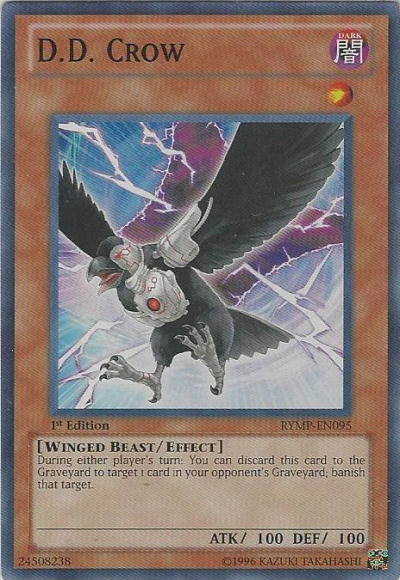
>implying D.D. Crow is relevantSo, things change. What does this mean for the meta? After you're done considering the few relevant cards which disrupt Monster Reborn without negating it, consider this: Monster Reborn isn't actually changing. But look at all these other cards that did change! Kevin Tewart himself explained how the new problem-solving card text works! If only Yugioh was that simple.

Monster Reborn can't follow its target out of the graveyard because of a rule which is applied frequently, and which a lot of players actually understand. Here are a few examples: A single Infernity Necromancer can use its once-per-turn effect, leave the field, then return and use its effect again. Why? Even though it's the same physical card, the game state treats it as a separate instance of Infernity Necromancer.

This text is much cleaner than it used to beThis second example is going to be a little closer to what we're after: Destiny HERO Dasher activates its in-grave effect. If Dasher is Special Summoned back to the field then sent to the graveyard a second time, it will be able to activate its effect again. Why? Because Dasher is treated as a separate instance of itself when it leaves the graveyard.

Applying that logic, what happens when Monster Reborn's target leaves the grave before Monster Reborn resolves? That card becomes a separate instance of itself, and Monster Reborn doesn't know what happened. Konami wants Yugioh to be a game that anyone can pick up and know how to play immediately. Problem-solving card was was announced as a "pillar" supporting this ideal but it has already seen major changes, and will probably see more.

That might be another post. Don't get lost in Yugioh's ridiculous maze of rulings, DNG
Read more...
Monday, February 4, 2013

Toy Story 4: The Future of Wind-Ups


     If you’d ask me, this has probably one of the most overall balanced formats that the Yu-Gi-Oh! TCG has had in a long time. There are only a handful of clearly defined “Tier One” decks, and each one has some very specific weaknesses that the rest of the meta can prey upon. To be quite honest, I don’t think we’ll see a single banned card on the March 2013 Forbidden/Limited list, we’re at that peaceful of a point in the game.


     However… if you’d ask any opponent on the other end of my table at locals this entire format, we’ve had a problem deck that is almost irrefutably “broken” and needs to be hit. I’d disdainfully have to agree. As much as I love my Wind-Ups, it needs to be understood that such a powerful deck won’t be left unchecked, and limitations for the deck are almost guaranteed for this banlist. But as many of you will remember, these were the same words that players spoke in August of 2012, shortly before the Limitation of Wind-Up Carrier Zenmaity to One per deck. Wind-Ups have had their factory broken into, but as we’ve done before, we can rebuild. And build them better at that.
     I could go on and on about the existing Wind-Up combos, but what I’d like to focus on in today’s article are several different scenarios. The problem with trying to limit Wind-Ups is that each card is a different piece of the puzzle. There isn’t anything inherently broken about Wind-Up Magician and Wind-Up Shark, but together they make arguably one of the most versatile two-card combos in the game, you can “Wind Up” with multiple Xyz monsters of various Ranks just by having them. The same can be said for Wind-Up Factory and Wind-Up Rabbit, the list goes on and on. But anyways, let’s not toy around, I’ll cover these scenarios one by one.
     The first scenario for Post March-2013 Wind-Ups is one that I’m sure we’ve all heard (or in most cases, said) is the Limitation of Wind-Up Magician. No doubt it would hurt the deck, after all, the most popular OTKs involve utilizing two of them throughout various stages of the combos. But what needs to be understood is that Limiting Wind-Up Magician is barely a kink in the Wind-Up Key, so to say.


     Magician’s primary function is a combo piece for the deck, you don’t just summon one on the first turn, ask for a response, and then pass. Magician’s utility is determined by the Wind-Ups that can assist her, including fellow Magicians. What we’d be seeing in a “Magician to One” format is simply alternative ways to use Magician. Magician and Shark without other Magicians can still net you a Shock Master, Zenmaity and supporting Xyz monsters, and many more possible outcomes. A two-card OTK becoming a three-card OTK isn’t as big a deal as it sounds, especially when you can tutor out all of your combo pieces with ease. Magician and Shark combo, but Magician and two Shark can make use of a recurring Magician. For example:


     Summon Magician, reveal Shark, bring out Rat, make Papilloperative detatching Magician for Rat, bring back Magician with Rat. Reveal Second Shark, bring out Rat, banish that Magician and have Rat and Rabbit form a Leviair. Levi grabs Magician, Shark turns level three and brings out a level three Wind-Up with Magician, make Zenmaity who will give you Shark to make Abyss Dweller with Magician. 1500+1700+1800+2100+1000 from Abyss Dweller is a nice 8100 on the board. And keep in mind that’s just when you’re going for a kill, Magician and Shark can still make whatever you need from the extra deck with Magician Limited.

     Now let’s discuss the other likely course of action, a Limited Wind-Up Shark. Shark is the fuel that keeps the Wind-Up Keys turning, but even Limited, he just needs a little help from his friends. I’d like to remind everyone that despite how Rat/Rabbit/Magician/Shark/Factories has been the traditional Wind-Up engine, they have many other members of their archetype available. And unlike some archetypes that I won’t mention (cough, Inzektors, cough), the “non-meta” Wind-Up cards pack a ferocious punch. Take Wind-Up Warrior for instance. Level Four, and can raise the level of any Wind-Up on the field by One. That’s any Wind-Up. He can make a Rank Four when brought out by Rat and can be a valuable asset alongside Shark for Rank Four and Five plays.
     Wind-Up Rat, bring back Wind-Up Magician, reveal your One Wind-Up Shark, bring out Wind-Up Warrior. Zenmaity and a Shock Master, Zenmaity and a Rank Five, Two Rank Four Monsters… Shark is never truly alone when used properly.


     I’d like to go into one last scenario, and after seeing the previous banlist, it’s what I believe to be the most likely outcome. Multiple Wind-Up hits. A Wind-Up Factory Limitation and a Shark Semi-Limitation could easily happen, and what this results in is hurt consistency. But rather than looking at it like that, I see it as more room for other options. I’ve been advocating for Wind-Up Warrior as an upcoming star for the deck next format, yet in a current build, I could barely find the room to include one. More open space also means room for new elements in the deck. Wind-Ups weren’t always as trap heavy as they are now back when Zenmaity was unlimited. Players nowadays who don’t have room for cards in their Wind-Up deck such as Pot of Duality, Compulsory Evacuation Device, or Thunder King Rai-Oh now have room to try out alternative playing styles. A blanket hit on the deck like I described in this section wouldn’t mean the end of the deck, but rather, a new beginning.


     What will happen to the deck? None of us know for certain, but all I can say is that nothing short of banning Magician, Shark, Rat, Rabbit and Factory all together would kill it (I shouldn’t have said that out loud, you never know with Konami). Again, if you ask me personally, just Ban Zenmaity himself, he’s unfortunately been behind all of the decks OTKs, loops, and so on, but I doubt that’ll ever happen. Wind-Ups have historically shown that even after losing key cards, the deck can continue to function, and the players will come up with new strategies. Until the day the banlist is announced, none of us will truly know how to play the new deck, but until then, one should always be prepared, and of course, unwound.


- thecheese103
Read more...

Windrose the Elemental Lord


LTGY-JP0(??) 
Windrose, the Wind Spirit God 「風霊神ウィンドローズ」
WIND/Bird - Effect/8/2800/2200
This card cannot be Normal Summoned or Set. This card cannot be Special Summoned except when you there are exactly 5 WIND Monster in your Graveyard. When this card is successfully Special Summoned, destroy all Magic and Trap Card your opponent controls. The effect of "Windrose, the Wind Spirit God" can only be used once per turn. If this card is removed from the field, skip your next turn's Battle Phase.
Read more...

You don't even have to draw them! ™


Before we begin, I just want to get two things out of the way:

-We are NOT going to insult your intelligence by giving you builds that are untested or “undertested”. You don’t deserve it and we don’t have the nerve to do it to you; some YGO columnists will but we won’t. I’ve played over three-hundred RATED matches with this archetype in DN’s 1400+ metagame, so I can safely say I know what I’m doing. At Yugibro, we won’t write about it if we don’t know about it. It’s as simple as that.

- We here actually understand that every player has their own accustomed style. We’re not telling you to copy us card for card; we’re giving you some ideas to build from. Take what you want to from what we give you, that’s how we do things around here. We’re not going to write pretentious crap about how you need to up your “mind games” or become a zen “draw master”. We aren’t going to tell you to take a shower before regionals, or how the latest steaming pile of dung will become tomorrow’s metagame (Quite a few self-proclaimed deckbuilders going around hyping Haze Beasts lately). We’re writing articles about YGO, for YGO players. That’s all there is to it.


I’ve been very reserved for the past couple of weeks ever since Chicken was released in the OCG. Even though I have tested the deck to what feels like perfection, I felt as though I should wait and see what the OCG Overlords do with Chicken and Wolfberk. The result was not pretty. Granted, my first level 3 build looked similar to what is commonly played in the OCG as of today, but over time with some solid advice and proper testing I gained a pretty good understanding of what works and what doesn’t.
Now as I said earlier, I’m not writing this so you can copy my build card for card. In fact, I’m saying quite the opposite. You should play what you feel MIGHT work, but also be aware that certain things shouldn’t be touched (3 Chicken and 3 Spirit are staples in level3 fists! Snake is a waste of space! Don’t mess with what works!).


                                      CORE PLAYSTYLE
 

(If you are already familiar with this deck please don’t bother reading this section, it’s not required to read at all. This is for those who are unfamiliar with the deck, or are still skeptical about it.)
Alright now this is something I’ve been meaning to address for a long, long time. I’ve been playing this archetype since November of last year and it was pretty clear what the core playstyle was. However, as more cards were released (ie Chicken and Wolfberk), the dynamics of the deck changed overnight. Now there really is no definite playstyle, as the options just radically opened up for the level 3 build.
If I had to REALLY narrow it down for you though, it would be to build advantage with Chicken while hitting the opponent’s sources of card advantage with Bear, Monkey, Beastgod and Cardinal. Or alternatively, if you have knowledge of what your opponent is playing, just flat out put them in soft-lock by dropping Swallow on the board. Cards like Kongo, Tenken, and Tensen can be classified as deterministic cards, because if you set them directly from the deck your opponent obviously knows what is coming. The point of those cards is to limit the options your opponent has. Setting Tensen from the deck will prevent any attempt to gain advantage from battle (Even if they use a card like Forbidden Lance, it will not matter as much. Consider them using Lance and as solid minus, especially if you are trying to setup your grave for Spirit.), Tenken will prevent any effects MP1 that will put you in a compromising position (Dark Hole, BLS effect, etc.), and Kongo will almost always shine if your opponent merely sets a single card. If their memory fails them, you can always take advantage with these cards. This is a great deck for those that like to aggressively control the game without too much setup.

My build which I have affectionately dubbed: "Horsecock Turbo" (Rekindling version is jokingly called OMEGA, because Rekindling is a 1 card OTK! Once you see that card, it's the end for you!)

The combo with nothing on the field is Spirit into Leopard/Chicken into Sirius into Rekindling into Horse into Chicken or Leopard depending on what was summoned via Spirit into Bear or Monkey then use Leopard or Chicken to get Tensu on the board.

2400+2200+1500+1600+400= 8100 dmg and this is only with one dance spell active and absolutely nothing on the field before Spirit into Sirius


                                              "Tech"


Hawk should be considered a staple at 1 in the Chicken build, but because many still doubt this card even with easy access to Horse, I’ll have to explain why.

2800 Horse MINIMUM, which will get you over anything the meta can throw at you within reason granted you cannot destroy the target via Bear.

Gets his effect under Macro Cosmos

Puts on average 1k-2k extra damage on the board, which is enough to OTK with an extra Fire Fist or give you enough damage to swing for a win.


Swallow is decent sideboard material. Putting him on the board is easier than people think. Simply search for him with Chicken, and if you don’t have Spirit in hand just synch for Horse into Raven to tribute summon Swallow. On summon he will net you a +2 granted you tribute Raven (the entire combo is a +4). His continuous effect will push your opponent into a soft-lock, and in some matchups this card is a win condition (To name a few: HEROs, Merlanteans, Inzektors, Verz Rabbit). Keep in mind this card also alleviates the problems this deck has with Effect Veiler and Forbidden Lance. The fact that this card is level 5 puts a lot of people off, but honestly…why would you want to get rid of this card? This is a 2-3k beater with a hexproof effect, you don’t want this removed from the field.

For those that aren't aware:


Prerequisite- Tensu or Fire Formation on the field, Chicken in grave, Spirit in hand
Now…Spirit into Chicken, Chicken into Swallow, Chicken into Tensu if you don’t already have it out, Horse into Raven, Raven into Swallow, both effects will trigger and pull a Tenki(Of course all tutors are situational…you may want a Kongo!) along with whatever protection you may need; a very easy play with a very easy +4. Congrats, you are now hexproof!


Fire Formation - Kongo

Wikia’s effect: When this card is activated: Target 1 face-down Spell/Trap Card your opponent controls; it cannot be activated while this card is face-up on the field. Your opponent cannot activate the targeted card in response to this card's activation. All Beast-Warrior-Type monsters you control gain 100 ATK.


Not a lot of players are talking about this. That’s disappointing, because I absolutely LOVE this card. Depending on your opponent’s field, you might want to switch out a dead Tenki for this using Chicken, or summon Panther through Horse to bring this out. It is absolutely killer in lategame, and if used in conjunction with Monkey or MST you can really do some serious damage to your opponent. The best part, I mean the absolute BEST part about this card is that you can prevent Gorz when you opponent tries to bluff it or bring it out by setting Compulse or DP. A large percentage of DN’s playerbase are unaware that gamestate is open when you set a card, so you might get away with a few things here and there if your opponent isn’t that knowledgeable. What I mean by this, is when you use Chicken to set Kongo from the deck they have a window of opportunity. If they pass it up, then you’re free to do some damage. I can’t begin to count how many times someone has passed up the chance to activate Threatening Roar when I set this card from the deck. Hopefully those of you unfortunate enough to see this on the board can respond accordingly now.
Run this at 1, just because you can search it out. If it had the words “When this card is activated: You can…” I would run 2. The reason being, you can use it in conjunction with Chicken 1st turn to set you up for Spirit. Unfortunately the effect is mandatory so you have to use it when your opponent has a card set in the s/t zone.


                                            Matchups


I’ll save you guys some time and list the best and the worst from what is currently relevant, rather than giving you the full blown rundown.

Best:

HEROs –Swallow can be considered a wincon here. Very easy to outadvantage HEROs, Tenken and Kongo can throw the HERO player out of rhythm. Anything they have maindecked can be run over by any of the beaters under the influence of Tensen.

Chaos – Bear hits their sources of card advantage. Their opening play, set 1 go, is easily answered with Bear. Tensen/Hawk makes Horse large enough to not be run over by their big monsters and Swallow shuts the Chaos player down ENTIRELY.

Prophecy – Unfortunately for Prophecy, the game is played on the field not in the hand. Any defense they may have such as Trag, easily answered with Bear. Monkey can hit sources of card advantage such as Tower, and Prophecy have a natural weakness to OTK decks since they cannot commit to the field on turn 1 or most likely run little protection. Once you go hexproof with Swallow, there isn’t much the Prophecy player can do.

Merlantean- Once again, Tenken shines in this matchup. It will throw the Merlantean player out of rhythm, and doubles as being bait for Marksman. Monkey will cause Abysspike to miss timing if summoned by Abysslinde, and Bear once again will hit whatever they commit to the field. Once you go hexproof, the Merlantean player can only run over Swallow or blow up the field with Blackrose. Luckily, Tensen and Tenken shine in both situations respectively.

Verz Rabbit- Bear, Swallow, and card advantage. All I have to say. We have access to Rivalry in the sideboard, the stun created by Ophion is laughable at best, and 1950 is the least of our worries. If you are in endgame and you have Spirit in hand with Chicken in the grave, you’ve already won.

Worst:

Chain Burn- This duel is like watching a dog bleed to death. Just use standard Chain Burn tactics, and game 2 try to get Rivalry up to prevent Lava Golem.

Anything that makes use of Skill Drain- Unlike Macro Cosmos which can be easily countersided against with IIW, my only sideboard to make use of this matchup is Malevolent Catastrophe. So I pretty much have to wait until I draw into MST, Heavy, or Malevolent to counter this card.


                                             Sideboard


Chain Disappearance is making a comeback. Expect this card to see a lot of play in the LTGY meta. It hits many common matchups like Prophecy (though don’t bother using this vs Prophecy, there is a better side I will explain later), Six Samurai and even the mirror match! Expect this card to be used against you when you are playing against a deck that cannot afford to use Skill Drain or Macro Cosmos. It also hits rogue matchups like Dragunity, Karakuri, so on and so forth. With so many decks relying on graveyard setup, this is shaping up to be great sideboard material.


I know what you’re thinking. “Oh but Neo, Fire Fist relies on backrow! This card is suicide!” Contrary to popular belief, it isn’t. The level 3 build, now more than ever, can give you formation production from absolutely NOTHING. Panther, like Chicken, has once again changed the dynamics of the deck. Before you had to summon Raven/Hawk via Horse and crash into a monster to get some formation production, now it’s easier than ever. The net loss from this card is negligible; just remind yourself that with this deck…every loss for your opponent is an even greater gain for you. There are some pretty neat combos with Bear/Gorilla and Tensen with this card as well, granted you would have to activate Tensen in response to the attack. The faster you push into endgame with this deck, the easier it is to out-advantage your opponent and dismantle whatever hope he may have left.  Always remember this.
I have never met a backrow I agreed with. I absolutely hate crashing into backrow. Any backrow heavy deck such as Gravekeepers, HEROs, even Wind-Ups and Dino/Verz Rabbit to an extent will hate this card. I’ve used it in hundreds of duels, and it has a lasting effect once it is used. I know I said I wouldn’t give you any “mindgames” malarkey, but this card can actually give you a legitimate psychological advantage. Once they see it, they will try and play around it. Whether it be setting less, or simply not attacking into it. This can work to your advantage, as mentioned earlier you can easily dismantle a “set 2 go” with MST/Gorilla and Kongo. I usually side this in if I am playing a backrow heavy deck and the rest of my sideboard cannot hit it OR when I go 2nd in the next game vs a deck like Wind-Ups. Always take turn order into account when you side!


I love this card, I really do. This has worked so well in the mirror, vs Prophecy and Merlantean as well. As you guys already know, you can chain this to Priestess or Megalo’s effect. I use this in conjunction with Imperial Iron Wall when playing vs Prophecy. You can also pull off some pretty clutch defensive plays in late game if you need to!


This card is primarily used to counterside vs Macro Rabbit, and decks that can make use of Macro. It also doubles as protection vs DP/BTH, so it has some generic use as well. This card can stun the Prophecy player, but not to the point where he can do nothing.

Soul Drain and Rivalry are self-explanatory wincon cards; I don’t think I need to explain why they are in the sideboard at all. You guys are good enough to know. Gemini Imps is just preference; I prefer to have them in there because Dragged Down to the Grave gets me salty.


My Dueling Network username is Neodasus

If you want to see the deck in action, I usually duel from 6:00 PM to 8:00 PM PST. Spec me as I try to make it to the #1 spot for matches! Maybe I’ll try to get a deep YCS run after the next set, we’ll see!
Alright guys, I hope I've been of some help to you. Maybe you changed your mind about something, or maybe you learned something new? Either way, thanks for reading.

Believe in the will2skill, and flame on!
Read more...

Thursday, January 31, 2013

Number 47: Nightmare Shark


YZ04-JP001 
No. 47: Nightmare Shark 「No.47 ナイトメア・シャーク」
WATER/Sea-Serpent - Xyz - Effect/Rank 3/2000/2000
2 x Level 3 Monster
If this card is successfully Special Summoned, you can select 1 Level 3 WATER Monster from your hand or that you control and place it as Xyz Material under this card. Once per turn, you can activate this effect by removing 1 Xyz Material from this card and select 1 WATER Monster you control. During this turn, other Monster than the selected Monster cannot attack, and the selected Monster can attack your opponent directly.


You could make this pretty easily in Merlantean, it activates their effects, but I don't see anything spectacular about it in particular. Bahamut does summon this AND you can put a material under it when it is Special Summoned, so it may turn out well. Only time and results will tell.
Read more...

Sunday, January 20, 2013

Don’t Press ‘Clear Deck’ Yet

                One of the more important parts in a trading card game is your deck. Your main deck of 40+ cards, side deck of 15 cards, and extra deck of 15 cards will determine how all of your games are played out. Anyone who has played TCGs for any given amount of time probably knows this already, but often people on DNG asking for deck advice will only be talking about the main board of 40 cards. If one is to become a good deck builder, then they would be wise to start looking at the total 70 cards as a whole instead of separate parts. In a match of Yu-Gi-Oh, the side and extra decks are every bit as important as the main.
Any given deck has one objective: To win the game. How each deck goes about this is different, but the goal is always the same, to come out ahead. This is where understanding the meta comes in. To win a game of YGO, you’ll need to beat other decks. To beat other decks, you’ll need to accomplish your goals faster than they can accomplish theirs or disrupt them from achieving what they need to in order to win. This may sound simple, but often I see people just build their decks as if they were going to be playing a game of solitaire. YGO is (or at least should be) a game of interaction. This style of thinking should always be forefront in your mind when building your main deck. You want to prepare it to do two things. First, it needs to accomplish your desired objective. For instance, if you’re building a XYZ spam deck, then it should include all the things you’ll need to successfully use that engine the majority of the time, whether that be an archetype you feel is strong or just generic cards that are good at making that condition easy to meet. Second, it needs to be able to successfully deal with other decks you are likely to play against. This part deals with both your Main and Side decks. Let’s say you enter a tournament of 4 people, you and 3 other players. If 2 of your opponents are running a Chaos variant and the other is running Dark Worlds, you’d probably want to gear your board towards disrupting the opposing grave. The sideboard could include cards that more directly hurt DWs. This kind of planning ahead isn’t always possible, but by studying the meta you play in, whether that is DN’s rated area, DNG tournaments, or your locals, you have to constantly be a student of the game going on around you and build accordingly.
The side deck can be one of the hardest decks to build for newer players, mostly because it is a tough balancing act. Let’s say there is a format where one deck is incredibly dominant, and that deck happens to be your only bad match-up. You can make a side deck with 11 of your 15 cards designed to hose it, but here is the problem: What are you going to take out of a 40 card board to include those 11 cards that won’t hurt your consistency? When a player over boards from the side deck to stop another deck it often hurts their consistency. It doesn’t matter if you are able to slow down the opposing deck if you slow yourself too far down in the process. All side deck choices should come in moderation, usually 3-9 cards is best, with 9 only being okay in extreme situations.
The Extra deck is just as tricky as the side deck because of its limit to 15 cards. These cards matter and having enough of your key targets to tool box is vital to winning games. Test constantly to see what needs inclusion and what doesn’t. Gagaga Cowboy, for example, is a great monster to burn off the last life of a defensive opponent, but if you find you rarely go to it and you’re right for space, it may not be worth it. This line of thinking is even important in decks that use the extra deck.  Build it for the situations where it might matter the most, picking monsters that will help you when you do need to go into it. By doing this, you’ll increase your odds of winning any given game.
This all applies directly to asking for deck help. If you want to post a deck on DNG and ask for help, don’t simply post “Here’s my Madolche deck, thoughts?” Instead, build the full main, side, and extra decks. Briefly explain your choices, why you took them over other common picks, and what you hope to accomplish and what will be sided into what match-ups and why (bonus points if you include what will come out when you do). Doing this will allow people to actually see how your deck is going to play out under your control, and therefore give you more direct and useful advice. Hopefully by doing the above and considering the advice of your fellow players critically, you can improve your overall odds of winning and keep your deck tight and consistent, no matter what you enjoy running. - Axrest
Read more...

Monday, November 12, 2012

Darwinism in a Deck: Laggia Made Right


If “Laggia Made Right” made you think of Dino-Rabbit decks, than this article is much more necessary than I thought. As you may or may not have guessed, we’re going to be learning about something you won’t find in your private school’s textbooks, Evolution, more specifically, the Evol Archetype/Series/Whatever you want to classify them as. They've been in the Meta ever since Order of Chaos gave us new tools to play with, and with Rescue Rabbit receiving his semi-limitation, players hooked in by the concept of the Evolzars now have more reasoning to play the deck than ever.
But before I continue praising one of my favorite decks in the game, let’s start from the ground up, what exactly are Evols? The archetype is divided into three parts, Evoltiles, your cute little Reptile friends, Evolsaurs, Gladiator Beasts turned into Dinosaurs and made competitive, and the one that anyone who has played competitively will know, the Evolzars. The gist of the deck is that your Evolsaurs get effects when special summoned (typically from the deck) by your Evoltile monsters. These effects range from searching the deck to popping backrow, and with the Evolzars having Dinosaurs as their Xyz Material requirements, you can easily bring them out. And seeing as how your Evolzars are: A Solemn Judgment with an attack stat; and a Divine Wrath without cost, you can shut down many of your opponent’s strategies and force them into wasting resources to stop your monsters.
Now that we’re up to speed, here’s a skeleton of what most consider to be the standard Evol build:

                                                      
If it’s in there, play it, all of the open spots are your tech choices. You might argue about 2 MST, but you can’t count on Diplo all the time. Gorz is in there because what Evols lack the most, is attack power. Laggia and Dolkka might have amazing effects, but if your opponent can get something out with 2600+ attack, you’re going to have to play around them. We’ll come back to this in a bit. You should add Veilers, Bottomless or Torrential, Enemy Controller or Mini-Guts, usually a third Evo-Diversity, and more tech spells such as Mind Control or Book of Moon. The extra deck should contain almost exclusively rank 4s, but one or two Rank 3s such as Acid Golem and Zenmaines for when you find yourself unable to hold all of these Westlo.
I’d like to take the time to explain why there are so many Evol Tile/Saurs, but yet we’re only running a select few. The truth of the matter is that Evols are one of those decks that have plenty of options, but not all of them are good. You’ll find that Evol Spells and Traps that aren’t named “Evo-Force” or “Evo-Diversity” are borderline unplayable, but this is far from the only archetype to have that problem. Cards like Evoltile Odonto used to be good, but compared to the options we have now, it’s just too slow and situational. At the same time, there are cards like Evolsaur Darwino, which seem good on paper, but end up clogging both your main deck and your extra deck, forcing you into losing tech choices on both ends. The whole issue with running Rank 5 or 6 monsters and attempting to go into Xyz monsters like Solda is simply that it doesn’t fit the most consistent Evol play style. Evols like Terias just clog the hand even more so than regular Evolsaurs do, and as I said, you’re losing too much Extra deck space to justify the decision. Three Cerato, Two Diplo, and Two Vulcano gives you enough room to wiggle with, and you’ll be having much better draws by not filling your deck with the “larger” Evolsaurs. I’m not saying that the Evols not run here are bad, but rather that the other cards are simply better.
As far as filling up the rest of that deck goes, make sure you have outs to situations Evols aren’t meant to handle. The deck can’t straight-up pop the opponent’s monsters, so make use of cards like Enemy Controller and Number 50: Blackship of Corn to deal with things like Spirit Reapers and Marshmallons. Duality is an amazing card, use as many as you can (two at the time of this article), and keep in mind that odds are you can just set a Westlo and lose nothing from playing the Duality. Bottomless is usually better than Torrential here simply because Torrential would result in you losing cards such as Westlo before they can be utilized. Enemy Controller is usually preferred over Mini-Guts, but keep in mind that both are intended to be used with Evoltile Najasho when possible. Make sure you have some heavy hitters in the extra deck, even things like Shark Drake can work here, it’s the attack stat that you’re looking for, not the effect. And if there is one spell card that you should always be running, it’s Pot of Avarice. Your build will usually be something of a 17-17-6 with Monsters/Spells/Traps respectively, and you burn through those 17ish monsters faster than you could possibly imagine. Having Avarice on hand, and in the future, even teching a Daigusto Emeral, can keep your momentum going.
Despite how much I praise the archetype, it’s imperative to know your weakness, because believe me, there are plenty of decks that act as hard counters to you without even realizing it. The easiest way to beat over an Evol deck is by simply having a very large attack stat. Cards like Grapha, the Karakuri Shoguns, and most Elemental HERO Fusions can simply beat right over your deck.  Your side deck should have been prepared to face decks like these before you even changed it to suit playing with Evols, but there are several main-deck options that can help you secure that Game 1. I didn’t leave Gorz within the deck skeleton above without good reasoning, his attack stat, and potentially even higher token, can save you more often than you’d think. Most Evol Builds only run a handful of traps, and your quick-play spells are just MSTs or Econs. Getting Gorz out is easy as soon as you draw into him in this deck. Make sure to keep options such as Compulse and Bottomless around between your Main and Side deck so that harder hitting bosses aren’t as potent of a threat.
Another common weakness is actually drawing your Evolsaurs. You’re almost always going to want your Evolsaurs in the deck to be brought out via the Evoltiles, but drawing them isn’t the end of the world. If you’re able to set a Westlo, get an Evolsaur out of his special, and then normal summon the hand-bound Evolsaur the next turn, you’ll have an easy Evolzar right there. A good tactic is being able to bluff your opponent. When you set a monster face-down and your opponent knows what you’re playing, they’ll often be hesitant to attack because they’re expecting a Westlo that they can just Veiler when you flip summon it. Play with your opponent’s head, you have a dead hand and just Duality’d into a card that tells your opponent what deck you’re playing? Set a Vulcano, your opponent could very likely pass, and then flip it and normal summon another Evolsaur, boom, another Evolzar out on the field.
Also keep in mind that your deck is a bit slower than some of the top decks this Format. You don’t exactly have a “Normal Summon Wind-Up Magician, Special Summon Wind-Up Shark, good game?” or “Set 5, Summon Stratos, effect good?” killer play, but the deck is great at preventing your opponent from doing just that. Between Laggia, Dolkka, Veilers, your backrows, and being able to function as a near-pure Rank 4 Toolbox, you’ll have something for every situation. Just be sure to play with a level head, conserving your resources can and will pay off in this deck, as you’ll see below.
Now I’d just like to spend some time going over general tactics as well. Your deck has an amazing, and I mean amazing, two-card combo with Evo-Force and Evoltile Najasho. Evo-Force will be used to special summon an Evolsaur from the deck and have it treated as if it was special summoned by an Evoltile, and Najasho special summons you an Evolsaur from the deck when he is used as a tribute. Keep in mind using Najasho as a tribute is a cost. Your opponent uses Solemn Warning on the Evo-Force? Go into a Vulcano from Najasho’s effect and bring someone out of the graveyard to Xyz with. Your opponent has two lonely backrow? Double up on Diplo. Your opponent has a few smaller monsters blocking the way to their LP? Bring out your Ceratos and keep on searching. Najasho can even be used in conjunction with Enemy Controller as I’ve referenced before, but remember, you can set Najasho before you tribute him for either of these cards instead of trying to summon him and getting hit by a Solemn. And remember to be wise with the order in which you special summon your Evolsaurs. Let’s go back to the Najasho-Force combo, say your opponent has one backrow on the field. Special Summon Diplo first, so that you force your opponent to use that backrow card if possible. Say that it was Torrential; you can now use Vulcano to pick up the same Diplo that you just forced a play with. And defensive plays work just fine as well, Evo-Diversity into a Westlo, use Duality, and then set any backrow cards that you’d like, and you haven’t lost any advantage. The classic “Enemy Controller on your Utopia, Chaos Xyz Change” play is also amazing in this deck, coupled with the fact that you can plus again off of Najasho.
Evols might not be a Tier 1, YCS winning deck, but they’re playable. It’s a deck that you can easily side things in and out of, and the deck itself forces your opponent into making their plays early thanks to your Evolzar squad and Diplo’s mandatory pop. You have your match-ups, the good and the bad, and even with their incidental counters becoming more popular this format, Evols aren’t going to be leaving the Meta anytime soon.


-Thecheese103
Read more...